When the Named Executor Cannot Be Found: Remedies for a Stalled Estate
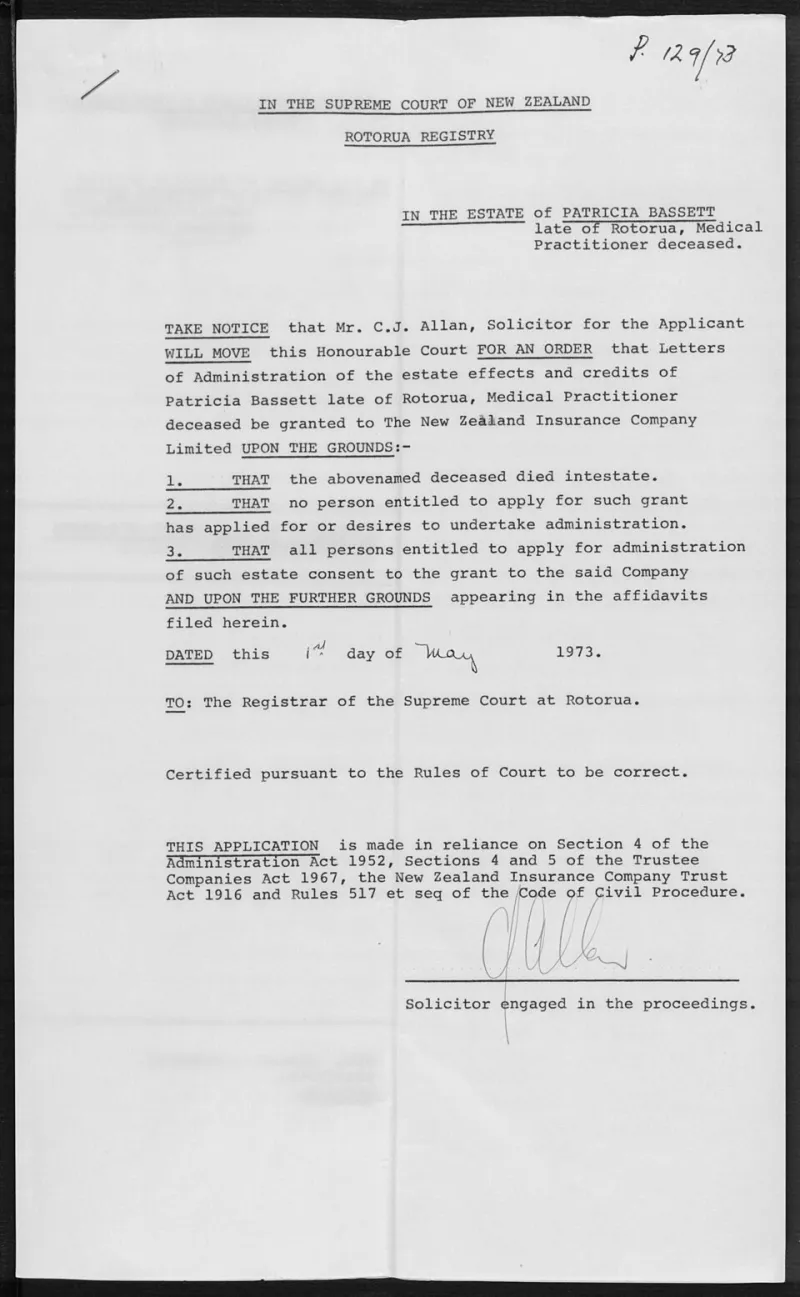
Photo: Archives New Zealand, CC BY 2.0, via Wikimedia Commons
An estate can only be administered by a personal representative. When the person named as executor in a will, or appointed as administrator on intestacy, cannot be found, refuses to act or loses capacity, the administration can stall at precisely the moment when decisions are most needed. The house may be uninsured, the bank accounts frozen and the beneficiaries left without answers. This article sets out the practical and legal routes available in England and Wales. The position in Scotland and Northern Ireland differs and should be checked separately.
Establish what has actually happened
Before an application to court, establish whether the personal representative has died, moved abroad, lost capacity, resigned or simply gone silent. Instruct a tracing agent, contact the solicitors who drafted the will, speak to relatives and check the last known address. If the executor has died, the probate registry may issue a grant of administration with will annexed; if an administrator has died after taking office, a grant de bonis non may be needed. Those are administrative consequences, not disciplinary ones, and they should be distinguished from a living personal representative who is refusing to act.
A written request is essential. Set out what is needed, why it is needed and a reasonable deadline. Keep the correspondence. If the executor has not intermeddled in the estate, they may be able to renounce the office by deed. Renunciation is not available once they have taken steps in the administration, and it does not solve every problem. A refusal to act after intermeddling is a matter for the court, not a letter to the probate registry.
Capacity requires separate advice. If the personal representative lacks mental capacity, the Court of Protection may need to appoint a deputy, and the interaction between the deputyship and the grant must be managed carefully. An attorney under a lasting power of attorney cannot simply step into the executor's shoes without considering the scope of the power and the probate rules.
Use the probate machinery first
The Probate Registry does not have a general power to remove a named executor because beneficiaries find them difficult. The court does. Before a contested application, consider a citation. A citation to take probate, or to accept or refuse a grant, calls on the personal representative to act or explain why they will not. If they do not respond, the court may allow another person to apply. Citations are technical and can be unforgiving on time limits, so they are best handled with advice.
Where there is a will, the court can pass over an executor and grant administration with will annexed to someone else. Where there is no will, the same principle can apply to an administrator. The aim is not punishment. It is to ensure that the estate has someone able and willing to administer it.
Removal and substitution in the High Court
The principal statutory route is section 50 of the Administration of Justice Act 1985. The High Court can remove a personal representative and substitute another person, or provide for the grant to be made to someone else. The court also has inherent jurisdiction. Applications are fact-specific. Typical grounds include a failure to act, a breach of fiduciary duty, a conflict of interest, prolonged disappearance, incapacity or a breakdown in the relationship between co-executors that prevents decisions being made.
The court will consider the beneficiaries' interests, the size and complexity of the estate and the proposed substitute. A beneficiary, a co-executor or a professional administrator may be appropriate. Evidence should be focused: the will, the grant, correspondence, attempts to trace, estate accounts and any urgent asset at risk. Delay is not neutral. If a property is deteriorating, a business is losing value or a limitation period is approaching, the application may need to be expedited.
Protect the estate in the meantime
Beneficiaries cannot simply take control. Intermeddling can create personal liability and complicate the grant. But they can take sensible protective steps: notify insurers, secure the property, redirect post, preserve digital records and tell banks that the estate is in difficulty. Urgent liabilities, such as buildings insurance or essential repairs, may need to be addressed with professional advice. Do not distribute assets before the grant unless there is clear authority to do so.
Keep a chronology. Courts and insurers respond better to a documented history than to a general complaint. Ask for estate accounts, an inventory and confirmation of what has been done. If the personal representative is a professional firm, use its internal complaints procedure and consider whether the estate has a claim against it.
Costs, timing and the realistic outcome
Costs are at the court's discretion. An application brought for the benefit of the estate will often be treated as an estate expense, but the court can make a different order where a personal representative has behaved unreasonably. Pre-action correspondence and mediation may narrow the issues, although neither can force an absent executor to engage.
The timeline depends on the court and the evidence. A straightforward substitution can be resolved in months; a disputed removal may take longer. The alternative to action is often indefinite delay, which is rarely in anyone's interest. The right route is the one that gets a competent personal representative into office with the least damage to the estate.
Howard Fairbairn's approach is to establish the facts quickly, preserve the estate and then choose the lightest legal tool that will work. A vanished executor is a serious problem, but it is not usually a permanent one.