Who Pays for the Tarmac? Private Roads and the Unseen Risks of a Home Purchase
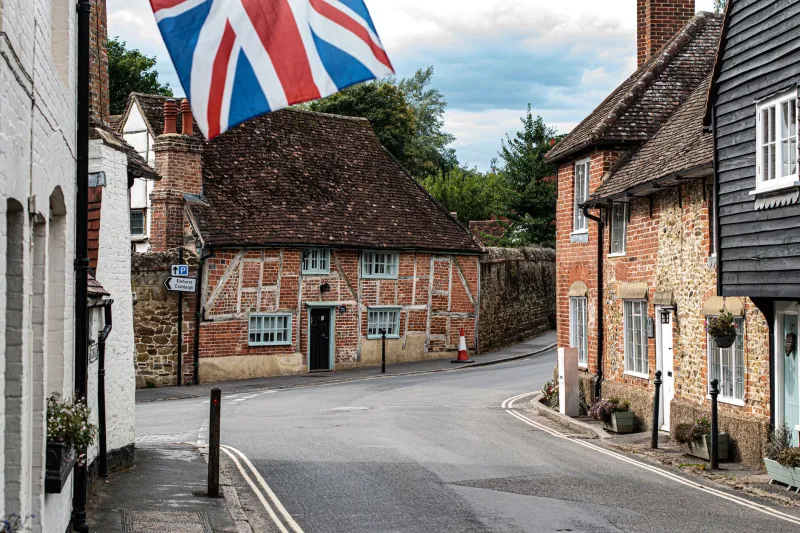
A private street often looks reassuringly ordinary. There may be a nameplate, a few mature trees and the familiar rhythm of household life. What is less visible is the legal arrangement behind the tarmac. For a buyer, the important question is not whether the road appears well kept today, but who is bound to repair it tomorrow, and at what cost.
Adoption is a status, not a compliment
In England and Wales, a road is either maintainable at public expense or it is not. The former is commonly described as adopted. The latter is often called private or unadopted. The distinction is legal rather than aesthetic. An unadopted road may be in excellent condition, while an adopted road may be badly maintained. What matters is who carries the liability.
Adoption usually arises through a formal agreement with the local highway authority, often under section 38 of the Highways Act 1980 for new developments, or through other statutory routes. A road may also have been adopted many years ago by virtue of its history. Buyers should not assume that a road is adopted simply because the council empties bins along it, repairs street lights or has resurfaced it in the past. Those facts may be relevant, but they do not settle the legal position.
The title tells the story
The first place to look is the registered title to the property and, where available, the title to the road itself. A buyer's solicitor will check whether the property benefits from a right of way over the road, whether there are covenants requiring contributions towards maintenance, and whether any company or residents' association has a role in managing shared areas.
Where the road is included in the seller's title, the position may be clearer, though not necessarily simple. The seller may own the surface but not the subsoil, or may own a share in a private road company. Where the road is not included, the buyer needs to understand the access rights and the repairing obligations that sit alongside them. A right of way can permit passage without imposing any duty on the person who uses it to pay for repairs, unless a covenant says otherwise.
A local authority highway search is a standard part of conveyancing for good reason. It can confirm whether the road is maintainable at public expense and whether any adoption agreement is in place. Local land charges searches may also reveal private street works charges or other financial burdens.
Covenants, companies and informal arrangements
Many private roads are maintained through a combination of covenants and collective goodwill. A covenant may require each household to contribute a fair proportion of repair costs. In some cases, a residents' association or management company collects funds and arranges works. In others, there is no formal structure at all, and maintenance depends on ad hoc agreements between neighbours.
Informal arrangements can work well for years. They can also become fragile when a household changes hands, when a large repair is needed, or when views differ about what is reasonable. A buyer should ask for evidence of how the road has been maintained, who has paid, and whether any disputes have arisen. Old invoices, accounts and correspondence can be more revealing than a verbal assurance that everything is dealt with informally.
It is also important to distinguish between a covenant that is enforceable and one that has become practically unenforceable through age, ambiguity or the loss of the benefiting land. Positive covenants to pay for maintenance can be particularly difficult to enforce against successive owners unless the title is structured carefully. This is why legal advice on the wording matters, not just a general understanding that everyone contributes.
Why uncertainty affects value and lending
Mortgage lenders are concerned with both access and repairing liability. A lender may be unwilling to accept a property if the road is not adopted and there is no clear, enforceable maintenance regime. Even where lending is available, the uncertainty can affect the valuation and the buyer's negotiating position.
There are practical consequences too. A road that has been patched up for years may require substantial resurfacing, drainage works or repairs to retaining walls. If responsibility is shared, the cost may fall on a small number of households. If responsibility is unclear, the works may be delayed while neighbours establish who should pay. Such disputes can affect the enjoyment of a home long after completion.
In 2026, buyers are also more likely to ask for a clear paper trail. A solicitor acting for a lender will want to see that the property has adequate access and that any maintenance obligation is understood. Sellers who cannot provide that evidence should expect questions, and possibly delays.
Before exchange: the questions to put
A prudent buyer should establish the following before committing:
- Is the road maintainable at public expense? Obtain confirmation from the highway authority, not simply from the seller.
- Who owns the road, and what rights does the property have over it?
- Is there a legal obligation to contribute to repairs, and how is each household's share calculated?
- Is there a residents' association or management company, and does it have proper accounts and reserves?
- Have any large repairs been carried out or are any proposed?
- Are there any disputes about maintenance, access or parking?
- Does the survey reveal defects in the road that could lead to future liability?
For sellers: regularising the position
Sellers can do much to avoid a late-stage problem. Gathering the relevant title documents, covenants, accounts and maintenance records at the outset is a sensible first step. If the arrangements are informal, consider whether they can be documented more clearly. If a company or association exists, ensure its paperwork is in order. If adoption has been discussed with the highway authority, obtain the correspondence.
Formalising arrangements can take time and may require legal drafting, neighbour agreement or local authority involvement. It is rarely wise to leave the issue until a buyer's solicitor raises it. A well-prepared seller can explain the position clearly, reduce the risk of renegotiation and demonstrate that the road has been managed responsibly.
A private road need not be a reason to walk away. It is, however, a reason to look closely at the legal foundations beneath the surface. Clear guidance at the outset is far better than discovering, after completion, that the road belongs to everyone and no one.