A Right of Passage: Buying Land When the Way In Is Not Yours

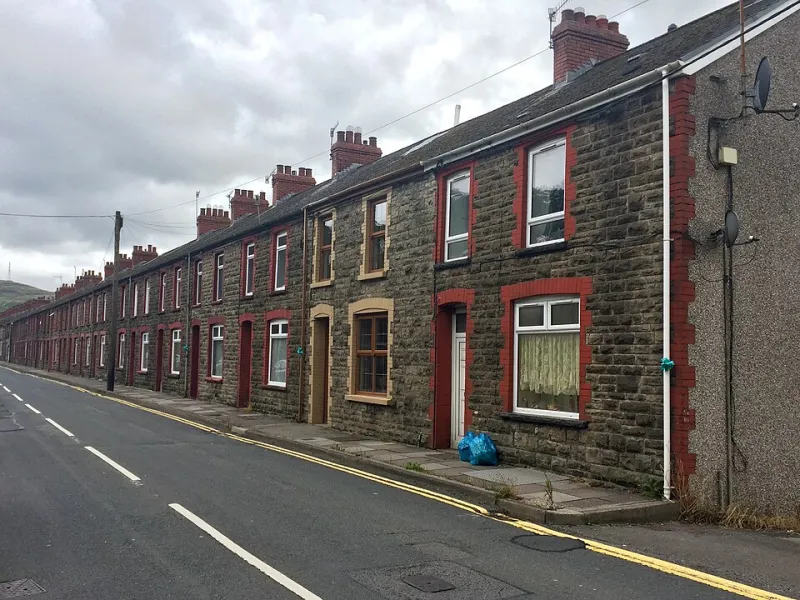
Photo: Dietmar Rabich, CC BY-SA 4.0, via Wikimedia Commons
A parcel of land is only as useful as the means of reaching it. Yet plots are regularly marketed with an informal nod towards a track, a gateway or a neighbouring field, and buyers are regularly surprised to discover that the nod is all there is. Once the sale completes, the absence of a legal route becomes the buyer's problem alone.
That is the difficulty with a landlocked site. The physical way in may be obvious, well-worn and used daily; the legal way in may not exist at all. Where the two diverge, the value of the land, its developability, its insurability and its marketability all rest on an argument rather than a document.
What landlocked actually means
The law is not concerned with whether a vehicle can presently get through. It is concerned with whether the owner has a right, enforceable against the owner of the intervening land, to pass and repass.
A plot may be compromised in several ways. It may have no frontage to a public highway at all, so that every approach crosses land belonging to somebody else. It may touch a highway but with no lawful or practical point of access — a verge, a bank or a drainage ditch in between. Or it may enjoy a route that is described in a transfer of the retained land but only for agricultural purposes, or only on foot, or only for the benefit of a plot that has since been subdivided. Each of these is a different problem with a different answer.
Where the land does adjoin a public highway, the question usually narrows to the physical access, sight lines, and any constraint imposed by the transfer, by a condition of the planning permission, or by the highway authority. Where it does not, the buyer is dependent on a private right of way, and that right must be found in the title or made.
The seller's assurance is not a right
It is common for particulars to state that "access is available" or that a track is "used by arrangement". Neither phrase transfers anything. An assurance given in correspondence, or repeated verbally at a viewing, does not create an easement, and a buyer who relies on it has no remedy against the owner of the land over which the route runs — only, at best, an argument with the seller.
Permission is the antithesis of a right. A route enjoyed by licence can be withdrawn, and a licence granted informally is precisely the sort of arrangement that founders when the neighbouring land changes hands. The first task for any purchaser's solicitor is therefore to establish, from the registers at HM Land Registry, whether the benefit of a right of way is actually attached to the land being sold, and whether the burden of it is registered against the land it crosses.
When the law supplies a way in
The law has long disliked leaving land unusable, and a small number of doctrines may assist. An easement may be implied on a severance of ownership: under section 62 of the Law of Property Act 1925, rights enjoyed with land at the point of transfer may pass into the conveyance; under the rule in Wheeldon v Burrows, quasi-easements that are continuous and apparent and reasonably necessary for the enjoyment of the land may be implied in favour of the buyer. An easement of necessity may arise where the land cannot be used at all without it, and an easement based on common intention may arise where both parties plainly intended a particular use.
None of these is a comfortable foundation for a purchase. An easement of necessity is construed strictly, is generally limited to the use being made of the land at the time of severance, and will not readily expand to accommodate a more intensive use — a track adequate for a tractor is not an access fit for a housing scheme. An implied grant can be defeated by express terms in the transfer, and it is often unclear whether it was ever intended to arise. Buyers should treat these doctrines as a possible fallback in a dispute, never as a substitute for due diligence.
Long use, and the narrowing of prescription
Owners often point to twenty years of use as though it settled the matter. Prescriptive claims remain possible in principle, whether under the Prescription Act 1832, the doctrine of lost modern grant, or a presumption at common law, but the requirements are exacting. The use must be open, peaceable and without permission — the familiar formula of nec vi, nec clam, nec precario — and it must be exercised by or on behalf of the owner of the land said to benefit.
Permission defeats prescription, and so does secrecy. A neighbour who has always said "of course, use the track whenever you like" has, in law, been granting a licence. A modest annual contribution towards the upkeep of a gate can have the same effect. And for land that is registered, the Land Registration Act 2002 substantially curtailed the acquisition of prescriptive easements by the mere passage of time for periods completing after October 2003: a claim will generally now require an application to the registrar, on notice to the registered proprietor, who may object. Long use is evidence to be weighed, not a title to be relied upon.
The checks to complete before exchange
Due diligence on a landlocked or quasi-landlocked plot should be methodical. Obtain the official copies and title plans for both the land being bought and the land over which the route passes, and read the register entries for the benefit and the burden of any right of way. Establish whose land the track crosses at each point. Raise specific enquiries about maintenance, contributions, obstructions and past disputes, and check the local search for public rights of way — a footpath on the definitive map is not a vehicular right of access.
Inspect the route itself rather than the plan. Look at width, surface, gates, culverts, bridges and overhead cables; consider whether a fire appliance or a delivery lorry could reach the site. If the intended use is commercial or residential rather than agricultural, confirm that the planning position and any access condition are consistent with what is proposed. Raise the question with the lender and the insurer at an early stage: a property with precarious access is difficult to mortgage and difficult to insure, and indemnity policies are rarely available where the defect is known.
Negotiating an easement that will hold
Where the route is not secured, the answer is a formal grant. The terms matter more than the length of the document. The route should be defined on a plan; the permitted use should be stated in terms of vehicles, hours and purpose; the obligation to maintain and the apportionment of cost should be clear, together with a right to enter and repair. Separate rights for services — water, drainage, electricity, telecommunications — should be reserved rather than assumed. If the route crosses a third party's land, the grant must come from that third party.
Once granted, a legal easement created by deed must be registered if it is to bind as a legal interest, and the buyer should ensure the registration is completed. An unregistered grant is a promise in a drawer.
Where the strip belongs to a stranger
The most difficult cases involve a narrow strip in separate ownership controlling the only feasible approach. The owner of that strip is under no obligation to grant anything, and the price demanded will reflect the value it unlocks. Negotiation, an alternative route, or a redesign of the scheme are the realistic options; compulsory purchase is seldom available to a private buyer.
Where access has already been obstructed, the owner's remedy is a declaration and, if necessary, an injunction, supported by evidence of the right and of the interference. Self-help — removing a barrier or a gate — should be resisted. Early advice, and mediation where the relationship permits it, is usually cheaper than litigation.
The long view
Land is bought and sold, but access rights endure or they do not. A plot that cannot be reached without a favour is a plot that will be difficult to sell, difficult to develop and difficult to defend. The time to resolve the question is before exchange, when the seller still wants the transaction and the neighbour still wants to be reasonable. After completion, the buyer owns the problem, and the only remaining question is what it will cost to solve.
Anyone contemplating a purchase of this kind should take advice on the title before committing to the price, and should budget for the possibility that the access must be bought rather than assumed.