What the Surveyor Left Out: Reading the Caveats in a Homebuyer's Report

Photo: Internet Archive Book Images, No restrictions, via Wikimedia Commons
Few documents in a residential transaction are read with such hope as the survey. It arrives, usually by email, a week or so after instructions, and buyers scan it for reassurance. Where the report is largely benign, that reassurance is generally well founded. Where it is qualified, the qualifications are frequently skimmed in the rush towards exchange, and precisely the wrong conclusion is drawn from them: that the surveyor has considered a problem and found it unimportant, rather than that the surveyor has not considered it at all.
That distinction matters. A survey is not a guarantee, a warranty or an insurance policy. It is a professional opinion, expressed within a defined scope, about the condition of a property on the day it was inspected. Understanding where the scope ends is as important as understanding what it says.
A valuation is not a survey
The first confusion to dispel is the most common. A mortgage lender's valuation exists to protect the lender, not the buyer. It answers a narrow question: is the property adequate security for this loan? Many valuations are now desktop exercises, or a brief inspection supplemented by comparable sales evidence. They routinely exclude damp, timber defects, services, drains and anything concealed. Buyers who assume the lender's inspection has covered the ground often discover otherwise only when works are needed.
If a valuation is all that has been commissioned, it should be treated as an affordability check and nothing more.
The levels, and what each one omits
The RICS Home Survey framework is well known, but the differences between the levels are more consequential than the marketing suggests. A Level 1 survey is a condition assessment with no advice on repairs or maintenance; it is suited to modern, conventional property in evidently good order. Level 2, the format most buyers encounter, adds commentary and advice, and may be offered with or without a valuation. Level 3 is a building survey, appropriate for older, altered, extended or non-standard property, and includes elements of construction and defect analysis the lower levels do not attempt.
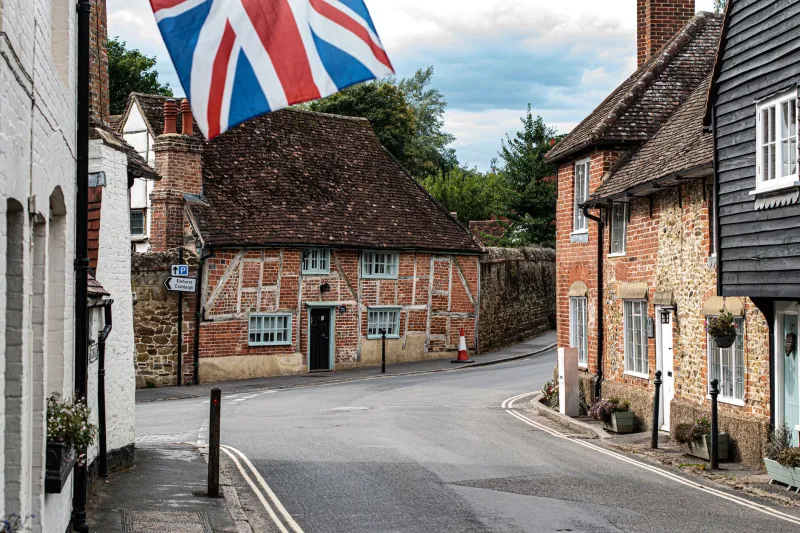
Choosing the wrong level is a quiet but frequent cause of disappointment. A Level 2 report on a sixteenth-century timber-framed cottage is not a defective report; it is a report answering a question the buyer should not have asked. The corollary is worth stating plainly: the cheapest survey is rarely the cheapest outcome.
Condition ratings and the phrase that carries the weight
Modern reports use a three-point rating scale. A rating of 1 indicates no action required; 2 indicates defects that should be attended to in due course but are not serious or urgent; 3 indicates serious defects or matters requiring urgent attention, or matters that require further investigation before the property is committed to.
The wording of a rating 3 is often more temperate than buyers expect, and that is deliberate. Surveyors are cautious professionals writing for a lay audience, not alarmists. A line reading 'the roof covering is at the end of its serviceable life and a specialist roofing contractor should be asked to advise further' is not a suggestion that the roof may be neglected. It is a statement that the surveyor, from ground level and possibly with binoculars, has seen enough to decline to express a concluded view.
Exclusions: the parts of the house nobody looked at
Every report contains a section listing what was not inspected, and it is the most useful part of the document. The recurring exclusions deserve to be memorised.
Services — gas, electricity, water and drainage — are typically not tested. The surveyor may confirm the presence of a meter or boiler but will not comment on its safety or efficiency. Drainage is often inspected only by lifting accessible covers, not by closed-circuit television survey, which means blockages, root ingress and collapsed runs beneath the garden remain unknown. Roof voids and sub-floor spaces may be entered only where safe access exists; where it does not, the report will say so. Chimney breasts, flues and concealed flues in older properties frequently fall outside scope. Areas behind heavy furniture, beneath fitted floor coverings and within sealed boxing are simply not seen.
There is also the question of environmental matters. Flood risk, radon, contaminated land and mining subsidence are not ordinarily part of a building survey; they are addressed through separate searches and enquiries, and buyers sometimes assume the surveyor has covered them.
Turning a caveat into an enquiry
A caveat does not oblige a buyer to walk away, nor to accept the position. It obliges the buyer to ask. The practical route is a written enquiry through the seller's solicitor, raised before exchange, tied to the precise wording of the report.
Where the report recommends 'further investigation', the sensible response is to commission that investigation. A roofing contractor's report, a CCTV drainage survey, an electrical installation condition report, a damp and timber specialist's assessment — each costs a modest sum relative to the value of the transaction and converts speculation into evidence. Quotes for any recommended remedial work should be obtained in writing, not estimated from the report's commentary.
Where the report notes a matter that the seller should know about — a history of movement, a past leak, an alteration without building regulations approval — that should be put to the seller directly. The replies will either close the matter or open it further, and both outcomes are useful.
Weighing the answer
Once the evidence is in hand, three routes present themselves.
Renegotiation is appropriate where a defect is quantifiable and the buyer nonetheless wishes to proceed. The figure should be based on the contractor's quotation, not on the surveyor's general caution, and the adjustment can be made through price, a retention or an allowance.
Further investigation is appropriate where the matter is unresolved but not evidently terminal — where a specialist report is outstanding, or where the seller's answers are incomplete.
Withdrawal is appropriate where the defect is structural and unquantifiable, where the title or planning position is unresolved, or where the seller is unwilling to allow the access needed to find out. No survey finding obliges a purchase to complete simply because the report has been paid for.
The limits of recourse
A buyer who later finds a defect has a potential negligence claim against the surveyor only where the defect fell within the scope of the instructions and a reasonably competent surveyor would have identified it. Excluded areas, inaccessible areas and matters expressly left for further investigation are, by definition, outside that scope. It is a narrow remedy, rarely pursued, and no substitute for proper inspection beforehand.
The survey is not a safety net. It is a map of what is known, what is suspected and what is out of view. Read in that spirit — and acted on before exchange rather than after — it remains the most cost-effective protection a buyer has. Simply buying it is not the same as using it.
This article is general guidance and does not constitute legal advice on any particular transaction.