Promises Written to the Land: Buying a Home With a Restrictive Covenant in 2026
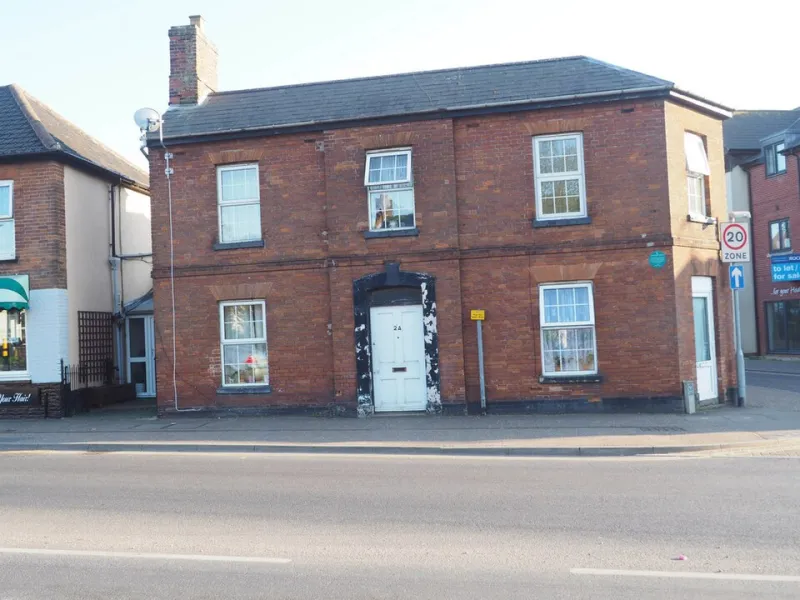
Photo: David Pashley , CC BY-SA 2.0, via Wikimedia Commons
A restrictive covenant is one of the quieter hazards of a residential purchase. It rarely appears in the estate agent’s particulars, and it may sit in a transfer dated many decades ago. Yet the promise it contains can still affect how a house is used, extended, let or operated as a business. For a buyer in 2026, the question is not simply whether the covenant is old. It is whether it remains enforceable, who can enforce it, and what can realistically be done about it.
What the title is actually saying
Most restrictive covenants appear in the title register as a notice or in the underlying deeds. They are promises not to do something on the land: not to use the property for trade, not to build beyond a certain line, not to keep caravans or outbuildings, not to alter the front elevation, not to subdivide the garden. The wording matters. A covenant may restrict use, building, parking, fencing, trees or signage. It may be drafted widely, or it may be tied to a specific plan and a specific purpose.
It is important to distinguish a restrictive covenant from a positive one. A positive covenant usually requires someone to do something, such as maintain a boundary or contribute to a shared access. Positive covenants do not generally run automatically with freehold land in the same way, though they can still create practical and contractual difficulties. Restrictive covenants, by contrast, can bind successors in title where the benefit and burden have passed correctly in law and equity. That is why a buyer can inherit a restriction agreed by someone else generations earlier.
Why an old promise may still bite
The age of a covenant is not, by itself, a defence. A restriction may have been drafted for a small Edwardian estate and now sit in the middle of a built-up area. Even so, it may continue to benefit neighbouring land. Enforcement usually depends on whether someone entitled to the benefit chooses to act. A local authority may have its own planning controls, but a private covenant is a separate matter. Planning permission does not override a restrictive covenant, and a buyer should never assume that a grant of planning permission makes the covenant irrelevant.
Breach can lead to an injunction or a claim for damages. In practice, many covenants are never enforced. That does not make them safe to ignore. A neighbour, a residents’ association, a developer or a person who has acquired the benefit of the covenant may object at the worst possible moment, often during a sale or a building project. The risk is not only legal cost but delay, reduced marketability and a lender’s refusal to proceed.
Checks before exchange
The first step is a careful reading of the title by a solicitor. The register will identify the covenant, but the underlying transfer or conveyance often gives the fuller wording and the land intended to benefit. Pre-contract enquiries should ask the seller about known breaches, complaints, correspondence and any insurance policy. The local authority search may reveal planning history, but it will not resolve private covenant issues.
A buyer should also consider the physical layout. If the covenant restricts outbuildings, has one already been built? If it restricts business use, has the property been run as a holiday let or consultancy? If it imposes a building line, does the proposed extension cross it? The seller’s answers are not conclusive, but they help to build a picture. So too does the plan attached to the transfer. Boundaries and benefited land are not always obvious from the register alone.
When indemnity insurance helps
Indemnity insurance is often used where a breach is possible but the beneficiary is unknown or unlikely to complain. A policy may cover defence costs and any reduction in value caused by enforcement. But it is not a universal solution. Insurers typically ask detailed questions, and they may decline cover where the buyer or seller already knows of a breach, a dispute or a threatened claim. A policy taken out after a problem has surfaced is unlikely to provide the comfort a buyer expects.
Cover should be checked for its limit, exclusions, duration and whether it passes to successors in title and mortgage lenders. Insurance is also not a substitute for legal advice on enforceability. It manages risk; it does not remove the covenant. A buyer should understand what is insured and what remains exposed.
Negotiating with the beneficiary
Where the person entitled to the benefit can be identified, a deed of release or variation may be possible. This is often the cleanest route, but it requires cooperation and usually a payment. The beneficiary may be a neighbour, a developer, a management company or trustees. Tracing them can take time, and their consent may depend on their own plans. A solicitor should check that the right person is releasing the right benefit and that any release is properly recorded.
The Upper Tribunal route
Where negotiation is not possible, an application can be made to the Upper Tribunal (Lands Chamber) under section 84 of the Law of Property Act 1925 to modify or discharge a restrictive covenant. The grounds include that the covenant is obsolete, that it impedes reasonable use of the land without securing practical benefit of substantial value, that the parties have agreed, or that modification would not injure those entitled to the benefit. Public interest and compensation can also be relevant.
The process is evidence-heavy. It requires a clear plan of the land, details of the covenant, evidence of the surrounding area and, often, expert valuation evidence. Objectors must be notified, and the Tribunal will decide whether the covenant should be modified, discharged or left in place. Planning permission may be relevant but is not decisive. Costs and timescales should be considered before an application is made.
A practical conclusion
For anyone buying in 2026, the sensible approach is to treat a restrictive covenant as a live issue until it has been properly assessed. Read the title, ask the seller, inspect the property, consider insurance where appropriate and take advice before exchange. A covenant that has slept for years can still wake up. Clear guidance at the outset is far cheaper than discovering the problem after completion.